Unity Platform
One multi-asset trading system in place of a fragmented brokerage stack
- Role
- Founding Engineer & Co-founder
- Scope
- System design, development, management
- Domain
- FinTech
- Stack
- Scala, TypeScript, React
01Where it started
I was in Unity from the first day, as the founding engineer. The whole technical side was mine: the system architecture, the people we hired to build it, and the shape the product would take on the market.
The market we were walking into ran on stitched-together stacks. A broker, an OTC desk, or a prop firm bought from four or five vendors: one terminal for charts, another for execution, a separate back office, and a CRM that knew none of it. Every new asset class meant another integration and another place for positions to disagree.
So the first question was not what to build but what to be. We worked out what belonged in v1, and what our unique selling proposition would be.
02Architecture
The answer was one ecosystem instead of a shelf of tools. Unity carried an instrument range no other platform offered at the time, and next to it the complementary pieces brokers had always bought separately. In those years the front office was invariably its own application, wired to the back office by hand.
I planned the architecture so those two halves were never apart. Front office and back office write to the same accounts, positions, and risk, and stay in step without anyone reconciling them.
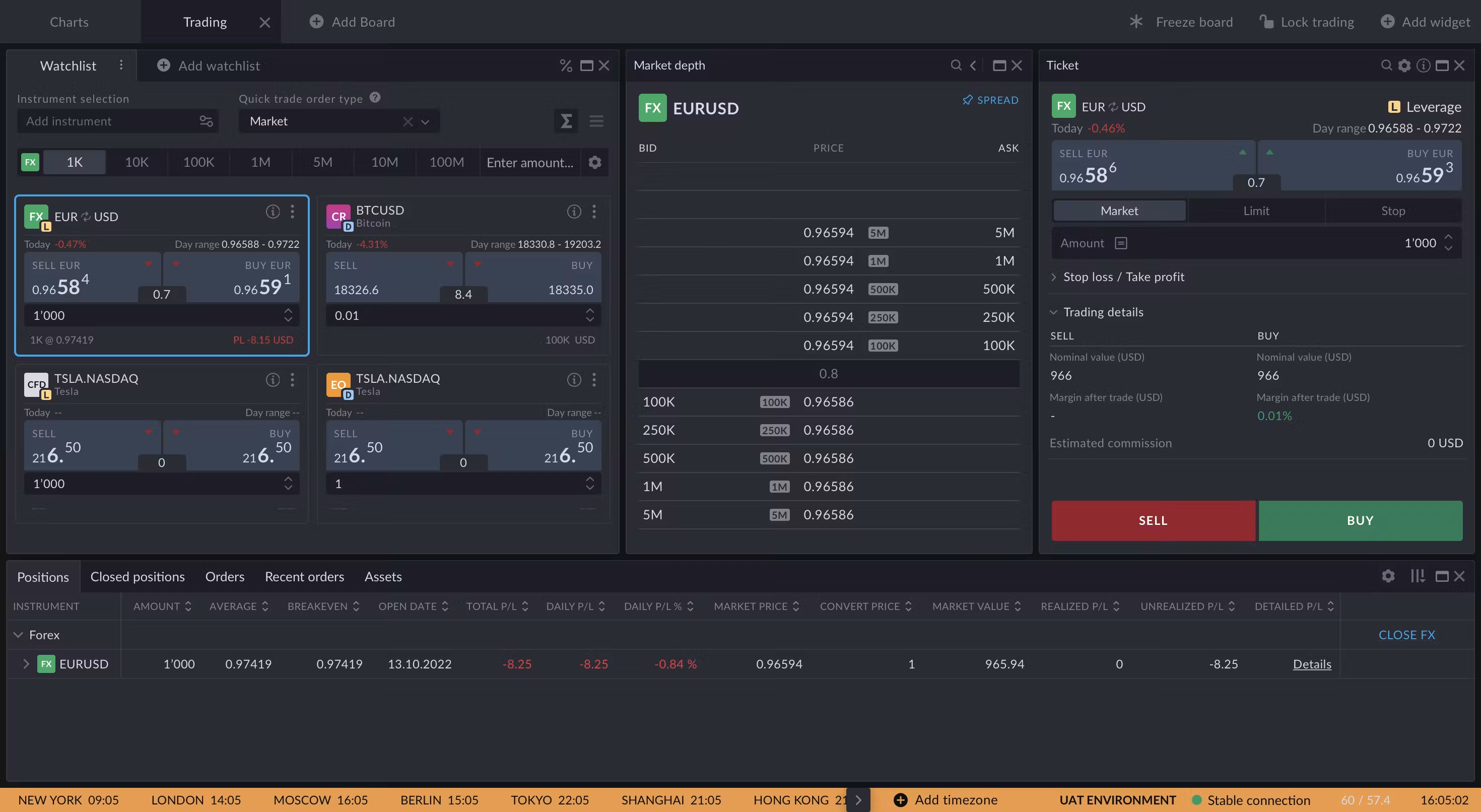
On top of that sits the board. A trader builds their own workspace out of widgets, a chart here, a watchlist there, an order ticket, their positions, and keeps several boards to switch between, one per strategy or market.
Everything on screen is one widget among others, which is what kept the suite coherent as it grew. A new feature meant a new widget, not another screen bolted onto the side of the product.
03Implementation
I hired the people who built it and kept it running, and worked across the whole suite with them. Four surfaces: Web Terminal, Unity Trader for professionals, Unity Investments for retail, and the Administrative Terminal for the operators behind them.
The suite split at the surface, not at the core. The same engine had to serve a professional who wants six charts, a depth ladder, and keyboard execution, and a retail investor who wants to buy Apple without learning what a ladder is. I owned the UX on the trader- and operator-facing surfaces, tuning density per audience while the data model, execution path, and widget system stayed shared.
Being the founding engineer meant the technical calls were mine to make and to live with: where the service boundaries ran, what the contracts between front office and back office looked like, and the conventions the team wrote by. Every one of them came back to me the moment it was wrong.
04Go-to-market
What we sold was a turnkey setup. To start trading digitally, a broker connected Unity and configured it, instead of integrating four vendors and hoping they agreed with each other.
Client portals, onboarding rules, and the questionnaires behind them were configurable, as was the instrument set itself. Front office and back office wired themselves together. That was the unique selling proposition, and it is what a new client was actually buying.
The proposition held up where it counts. We signed a partnership with a bank that went on to offer the platform to its own clients white-label, under its own name. Configuration deep enough to carry someone else's brand is the hardest test of that promise, and the architecture passed it.
05Results
By launch the platform carried 100K+ instruments across five asset classes. The operator side, where accounts, risk, margin, and reporting live, sat on the same foundation as the trading screens rather than beside it.
It has outlived my part in it by years. The company is still selling the platform, with dozens of contracts on it today.
It is the project that set how I have worked since: build the system that makes the tenth feature cheap, not the one that makes the first feature fast.